
Profile Description
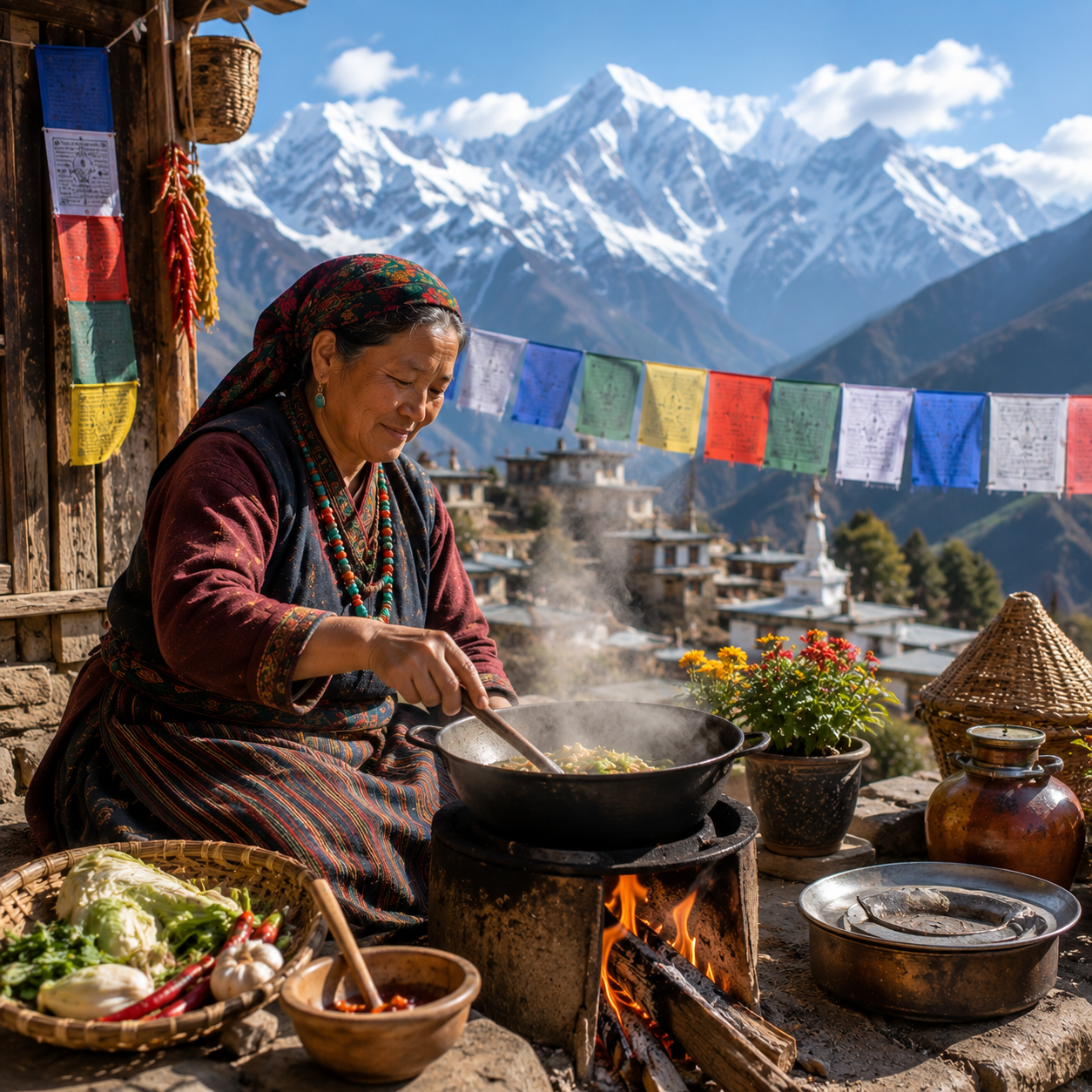
High in the world’s most majestic mountain ranges, Himalayan cuisine has been shaped by altitude, climate, and centuries of tradition. Stretching across regions of Nepal, Bhutan, Tibet, and northern India, the cuisine reflects a close connection to the land and its people. Simple ingredients are transformed into nourishing meals designed for mountain living.Across villages and valleys, food remains closely tied to family, community, and cultural heritage. There is an authenticity to the cuisine that reflects both resilience and resourcefulness.
Ultimately, Himalayan cuisine offers a wholesome and distinctive culinary experience.
Core Culinary Elements Of Himalayan Cuisine
- Hearty meals designed for cold mountain climates
- Strong connection between food, culture, and daily life
- Traditional cooking methods passed through generations
- Use of locally sourced grains, vegetables, and dairy
- Simple preparation highlighting natural ingredients
- Influence of Buddhist, Tibetan, Nepalese, and regional traditions
Key Ingredients
- Barley, millet, buckwheat, and rice
- Potatoes and seasonal mountain vegetables
- Yak milk, butter, and cheese
- Lentils and legumes
- Fresh herbs and mountain spices
- Tea forming an important part of daily life
Sweets and Staple Dishes
- Momo dumplings filled with meat or vegetables
- Thukpa noodle soup served throughout the region
- Dal bhat featuring lentils, rice, and accompaniments
- Tibetan butter tea enjoyed daily
- Traditional flatbreads and steamed breads
- Sweet treats often prepared with honey and dairy
Himalayan food reflects a way of life shaped by nature and tradition. Often, meals are designed to provide comfort and nourishment in challenging mountain environments. Recipes remain closely connected to local customs and seasonal ingredients. Communities continue to preserve cooking methods that have sustained generations of mountain families. In many ways, Himalayan cuisine captures the spirit of resilience, simplicity, and hospitality found throughout the region.
The Himalayan region is equally renowned for its extraordinary landscapes and cultural heritage. Towering peaks, ancient monasteries, prayer flags, and remote villages create a setting unlike anywhere else in the world. From the foothills of Mount Everest to the valleys of Bhutan and Nepal, the connection between people, food, and the natural environment remains deeply intertwined.
High in the world’s most majestic mountain ranges, Himalayan cuisine has been shaped by altitude, climate, and centuries of tradition. Stretching across regions of Nepal, Bhutan, Tibet, and northern India, the cuisine reflects a close connection to the land and its people. Simple ingredients are transformed into nourishing meals designed for mountain living. Across villages and valleys, food remains closely tied to family, community, and cultural heritage. There is an authenticity to the cuisine that reflects both resilience and resourcefulness. Ultimately, Himalayan cuisine offers a wholesome and distinctive culinary experience.
Core Culinary Elements Of Himalayan cuisine.
- Hearty meals designed for cold mountain climates
- Strong connection between food, culture, and daily life
- Traditional cooking methods passed through generations
- Use of locally sourced grains, vegetables, and dairy
- Simple preparation highlighting natural ingredients
- Influence of Buddhist, Tibetan, Nepalese, and regional traditions
Key Ingredients
- Barley, millet, buckwheat, and rice
- Potatoes and seasonal mountain vegetables
- Yak milk, butter, and cheese
- Lentils and legumes
- Fresh herbs and mountain spices
- Tea forming an important part of daily life
Sweets and Staple Dishes
- Momo dumplings filled with meat or vegetables
- Thukpa noodle soup served throughout the region
- Dal bhat featuring lentils, rice, and accompaniments
- Tibetan butter tea enjoyed daily
- Traditional flatbreads and steamed breads
- Sweet treats often prepared with honey and dairy
Himalayan food reflects a way of life shaped by nature and tradition. Often, meals are designed to provide comfort and nourishment in challenging mountain environments. Recipes remain closely connected to local customs and seasonal ingredients. Communities continue to preserve cooking methods that have sustained generations of mountain families. In many ways, Himalayan cuisine captures the spirit of resilience, simplicity, and hospitality found throughout the region.
The Himalayan region is equally renowned for its extraordinary landscapes and cultural heritage. Towering peaks, ancient monasteries, prayer flags, and remote villages create a setting unlike anywhere else in the world. From the foothills of Mount Everest to the valleys of Bhutan and Nepal, the connection between people, food, and the natural environment remains deeply intertwined.
